Print files
12x18 vs 16x20: Which Print Size Should Your Etsy Listing Use?
12×18 is a 2:3 ratio (3600×5400 px at 300 DPI). 16×20 is 4:5 (4800×6000 px). They're different shapes, not just different sizes — here's how to pick, or list both correctly.
Direct answer
Choose 12×18 when the photo is a 2:3 camera frame (typical 35mm, or many phone 3:2 modes) and you want a poster-like print at 3600×5400 pixels (300 DPI). Choose 16×20 when the scene sits closer to 4:5 — like an 8×10 — and you can supply 4800×6000 pixels. The two aren't interchangeable: listing both means two crops from the same focal point, never one file stretched to fit.
Plenty of shops add every popular frame size to a dropdown and reuse the same JPEG across all of them. That's exactly how buyers end up with a 16×20 that chops off heads, or a 12×18 with a strip of empty sky where the subject used to be. The two sizes look nearly identical in a mockup thumbnail. On an actual wall, they're different rectangles.
The right listing is whichever one your photograph can actually fill at 300 DPI without stretching. If the original file is large enough, offering both sizes — each with its own honest crop — turns more “which size should I get?” questions into sales.
They are different shapes
12×18 inches is 2:3, which at 300 DPI works out to 3600×5400 pixels in portrait. 16×20 inches is 4:5 — 4800×6000 pixels. Do the division and the gap is obvious: 16÷20 = 0.80, but 12÷18 = 0.67. That difference is exactly the extra sky or floor you have to crop off one of them.
If the original photo is a 35mm-style 2:3, 12×18 wastes less of the scene. If you shoot 4:5, square-ish still life, or already sell 8×10, 16×20 stays closer to the camera frame. 8×10 is also 4:5 — 16×20 is the larger sibling, not a different ratio.
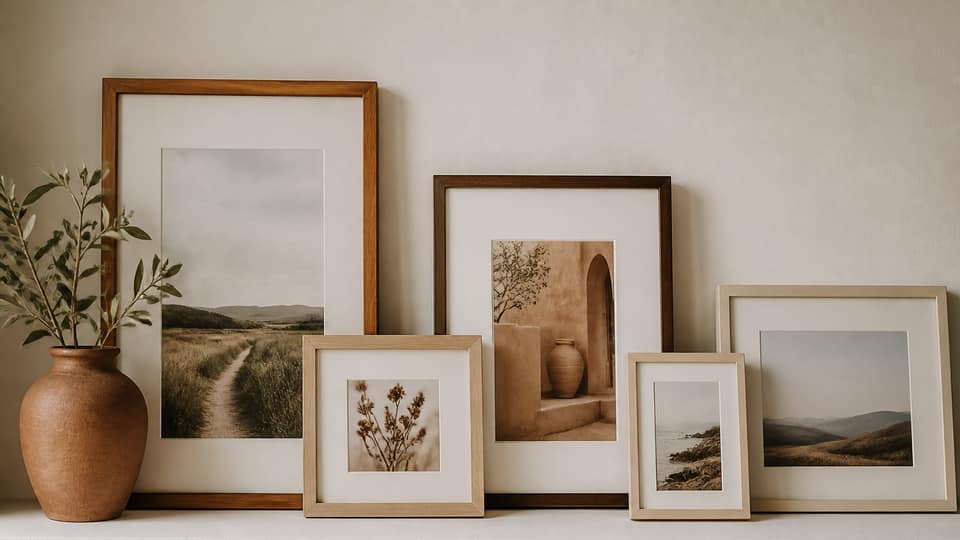
8×10 · 4:5
11×14
12×18 · 2:3
16×20 · 4:5
| Size | Ratio | Portrait pixels | Short side at 300 DPI |
|---|---|---|---|
| 12 × 18 in | 2:3 | 3600 × 5400 | 3600 px |
| 16 × 20 in | 4:5 | 4800 × 6000 | 4800 px |
| 8 × 10 in (same ratio as 16×20) | 4:5 | 2400 × 3000 | 2400 px |
| 12 × 16 in | 3:4 | 3600 × 4800 | 3600 px |
Which size sells on Etsy?
There is no single winner. 12×18 reads as a poster and pairs with cheap poster frames. 16×20 reads as a statement frame and needs more wall. Shipping tubes vs boxed frames also change your cost.
What you can photograph matters more than trend charts. A wide landscape with important content on the left and right will suffer on 16×20. A portrait with headroom will suffer on 12×18. Look at the subject, not the SKU popularity list.
List both if you can export both
Shops that offer two sizes should upload two files, each cropped for that ratio with the same focal point. Reopic keeps one pin and exports every custom size you add — ZIP folders per image, then per ratio.
Open Studio, add 12×18 and 16×20 as custom ratios, Export Artwork. If you also sell 8×10, add it too — it shares the 16×20 crop shape. Free allows three ratios on one image per day. Pro is $33 lifetime for batch ZIP.
Check the original has enough pixels
16×20 at 300 DPI wants 4800 pixels on the short side after crop. Many phones shoot 4000-pixel-wide JPEGs. After a 4:5 crop you might land around 3000×3750 — fine for 8×10, thin for a sharp 16×20. Be honest in the listing or sell 12×18 / 8×10 instead.
Do not upscale 3000 pixels to 4800 and call it 300 DPI. That is digital zoom. Why prints look soft is usually too few pixels, not a bad printer.
A simple way to choose for one painting
Look at what you would crop off. On a 2:3 original, a 16×20 (4:5) crop removes a strip from the long sides — often sky and foreground. If those strips hold the mood, list 12×18 as the hero size and keep 8×10 as the small gift size (also 4:5, so it matches 16×20, not 12×18).
On a 4:5 original or a square-ish still life, 16×20 and 8×10 waste less. You can still offer 12×18 if the extra height is empty wall or table that you do not mind losing — or if you composed with headroom on purpose.
Write the size names in the listing photos. A mockup of 16×20 next to a mockup of 12×18, both cropped honestly, converts better than one stretched JPEG in two frames. Export both from Studio with one pin so the subject does not jump between mockups.
Frames, shipping, and cost
12×18 poster frames are cheap and light to ship in a tube. 16×20 frames are heavier and more often boxed. Your margin on a $28 print can vanish in packaging if you default to the larger size for every order.
Offer the size you can print sharply and pack profitably. A sharp 12×18 beats a soft 16×20 in reviews, which is the ranking signal Etsy actually cares about after the first week.
FAQ: 12x18 vs 16x20 print
Is 12x18 the same as 16x20?+
No. 12×18 is a 2:3 ratio and 16×20 is 4:5, so each needs its own crop. Stretching one file to fit both sizes will visibly distort the subject.
How many pixels is 12x18 at 300 DPI?+
3600×5400 pixels in portrait, or 5400×3600 in landscape.
How many pixels is 16x20 at 300 DPI?+
4800×6000 pixels in portrait, or 6000×4800 in landscape.
Can I use an 8x10 file for a 16x20 listing?+
Only if you're fine with it being soft — same ratio, but 2400×3000 pixels only works out to 150 DPI when printed at 16×20. You need a larger original, or you shouldn't offer 16×20 for that photo.
Is 12x18 better than 16x20 for posters?+
Neither is universally better. 12×18 reads as a poster and ships cheaply in a tube. 16×20 reads as a framed statement piece but needs more pixels and heavier packaging. Pick based on the photo's shape and your shipping costs, not a generic popularity list.